The 21st Century ROAD to Housing Act is now law, and for Community Reinvestment Act (CRA) and community development teams, one change stands out: national banks and state member banks can now hold public-welfare investments equal to as much as 20% of capital and surplus, up from 15%. The higher statutory limit does not apply to state nonmember banks or credit unions.
The law took effect on July 11, 2026, after the constitutional review period expired without a presidential signature or veto. It passed the Senate 85 to 5 and the House 358 to 32.
Beyond the higher investment ceiling, the enrolled H.R. 6644 text also updates the Community Development Block Grant (CDBG) program, expands the permitted use of CDBG funds for affordable-housing construction, and establishes other housing initiatives that could influence where community development projects are financed and how they are structured.
Not every provision takes effect in the same way or on the same timeline. Some changes became effective at enactment, while others depend on agency regulations, appropriations, studies, new programs, or updated guidance.
For CRA teams, enactment marks the beginning of an implementation period, not a new examination deadline. The immediate priorities are to determine which provisions apply to the institution, evaluate how they may affect the community development strategy and investment pipeline, and continue documenting the purpose, qualification, and geographic relevance of each activity. Those core CRA expectations have not changed.
Article I, Section 7 of the U.S. Constitution allows a bill to become law when the President does not sign or return it within 10 days, excluding Sundays, as long as Congress remains in session.
That is what happened with the 21st Century ROAD to Housing Act. The absence of a signature or veto does not weaken the law. As the Wall Street Journal reported, its provisions carry the same legal force as they would have if the President had signed it.
The final legislation combined housing proposals considered by both chambers into H.R. 6644. GovInfo describes the measure as legislation “to increase the supply of housing in America, and for other purposes.”
For compliance teams, the unusual path to enactment is mostly background. The practical questions are what the final text changes, which institutions are covered, and what still depends on agency action.
The ROAD to Housing Act raises the aggregate statutory limit on public-welfare investments from 15% to 20% of capital and surplus for two categories of banks:
The amended statute replaces “15” with “20” in the relevant authorities. It also directs the Office of the Comptroller of the Currency (OCC) and the Federal Reserve Board to report periodically on public-welfare investment activity.
Public-welfare investments are designed primarily to promote public welfare, including the welfare of low- and moderate-income people and communities. Depending on the transaction and applicable rules, these investments may include Low-Income Housing Tax Credit and New Markets Tax Credit projects, investments in Community Development Financial Institutions, Opportunity Zone equity, affordable housing, economic development, and other activities serving qualifying communities or populations.
For covered banks, the change creates five additional percentage points of potential capacity. But a higher ceiling does not make an investment qualified by default. Public-welfare and CRA treatment still depend on the investment’s purpose, structure, beneficiaries, geography, documentation, and the regulatory framework that applies to the institution.
For additional planning considerations, see RiskExec’s guidance on building a strategic qualified investment program under CRA.
The statutory amendments expressly apply through:
The law does not make the same change to the separate authorities governing state nonmember banks or credit unions. Those institutions should not assume the 20% limit applies to them based on the ROAD to Housing Act alone.
Covered banks also need to separate the statutory ceiling from the procedures required to make an investment. Existing OCC rules under 12 CFR 24.5, for example, include notice and prior-approval requirements that vary based on the bank’s condition, the size of the investment, and aggregate outstanding investments.
Before relying on the additional capacity, a bank should confirm:
An institution may also want to coordinate with legal counsel and its regulator before committing to a transaction that depends on the newly available headroom.
Not by itself. The higher ceiling may give some national banks and state member banks more room to invest in affordable housing, CDFIs, community development entities, and other public-welfare activities. It does not reduce the work required to manage a qualified investment program.
In fact, a larger permissible portfolio can increase the demands on opportunity sourcing, capital planning, approvals, assessment-area analysis, qualification, performance monitoring, document retention, and examination reporting.
A bank operating near the former 15% limit can start with five questions:
Capacity is only the starting point. An investment that fits under the statutory ceiling still needs a documented public-welfare purpose, and CRA consideration continues to depend on the facts of the activity.
For a broader explanation of community development within CRA performance, see RiskExec’s guide to the Community Reinvestment Act.
The CDBG program provides federal funding to states and local governments for activities that advance community development objectives. The ROAD to Housing Act makes several changes that could affect the affordable-housing and community development markets in which banks participate.
The enrolled legislation adds new construction of affordable housing as an eligible CDBG activity. A recipient may use no more than 20% of its allocation for that purpose.
The amendment applies to amounts appropriated after enactment, so it does not automatically make previously appropriated CDBG funds available for new construction.
Over time, the change could create more opportunities to combine CDBG funding with bank loans, tax-credit equity, grants, subordinate financing, and other public or private capital.
The law establishes a framework in which housing-production measures can influence portions of CDBG funding. HUD must calculate and publish information about housing growth improvement rates and identify recipients that receive applicable bonus amounts.
The details will matter. CRA and community development teams should watch HUD rulemaking and program guidance before assuming how the allocation provisions will affect a particular market or jurisdiction.
Banks generally do not receive ordinary CDBG allocations the way state and local grantees do. But CDBG funding often supports the developers, housing agencies, municipal departments, community development corporations, CDFIs, nonprofit housing organizations, and disaster-recovery groups that banks lend to, invest in, or serve.
Changes in CDBG eligibility and allocation patterns could affect where projects become financially feasible. That, in turn, may shift the geographic distribution of potential community development loans and investments.
Institutions should compare emerging CDBG-funded opportunities with their assessment areas and other eligible community development geographies rather than assume that every housing project will receive the same CRA treatment.
A few related provisions are also worth watching, even if they do not immediately change a CRA compliance requirement. RiskExec’s 2026 CRA and fair lending guide covers the broader regulatory priorities for the year.
The law revises statutory provisions affecting FHA multifamily mortgage limits. Those changes may influence the financing structure or feasibility of some multifamily and affordable-housing projects.
Banks involved in FHA-related multifamily financing should watch HUD implementation and evaluate whether revised limits affect their lending or investment pipelines.
The legislation includes initiatives related to mortgages with principal balances of $100,000 or less. The House Financial Services Committee’s section-by-section summary describes a HUD pilot intended to expand access to small-dollar mortgages.
Small-dollar mortgage availability can intersect with CRA, fair lending, and market-access analysis. Institutions should distinguish a study or pilot from a final rule that directly changes lender obligations, then evaluate future agency action on its own terms.
The law also includes restrictions related to certain large institutional investors purchasing single-family homes. The provision has drawn public attention, but its direct relevance to many CRA programs may be limited.
CRA teams should monitor it when their institution finances investors, manages affected real-estate exposures, or evaluates changes in local housing conditions. For most teams, however, this is not the provision that deserves the most immediate attention.
Earlier versions of the housing legislation included broader community-banking provisions. Not every proposal discussed during House and Senate consideration appears in the enacted text.
Implementation planning should therefore be based on the final version of H.R. 6644, not summaries of earlier House or Senate packages. GovInfo provides the authoritative enrolled text.
That distinction matters when internal presentations, trade-association summaries, or earlier legislative analyses refer to provisions that were later changed or removed.
There is no single new CRA deadline tied to enactment, but there are several practical steps teams can take now.
RiskExec’s article on what examiners look for in CRA community development services offers additional guidance on qualification and documentation.
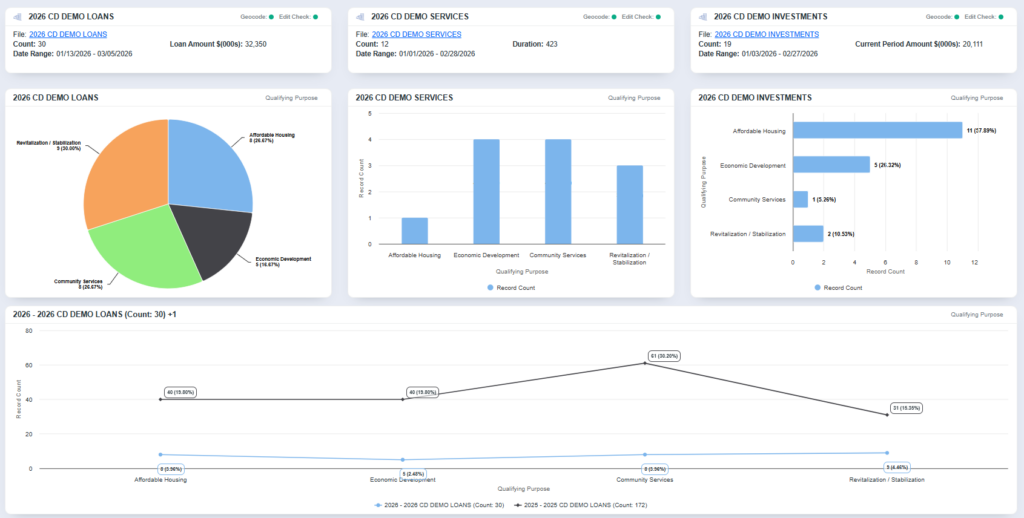
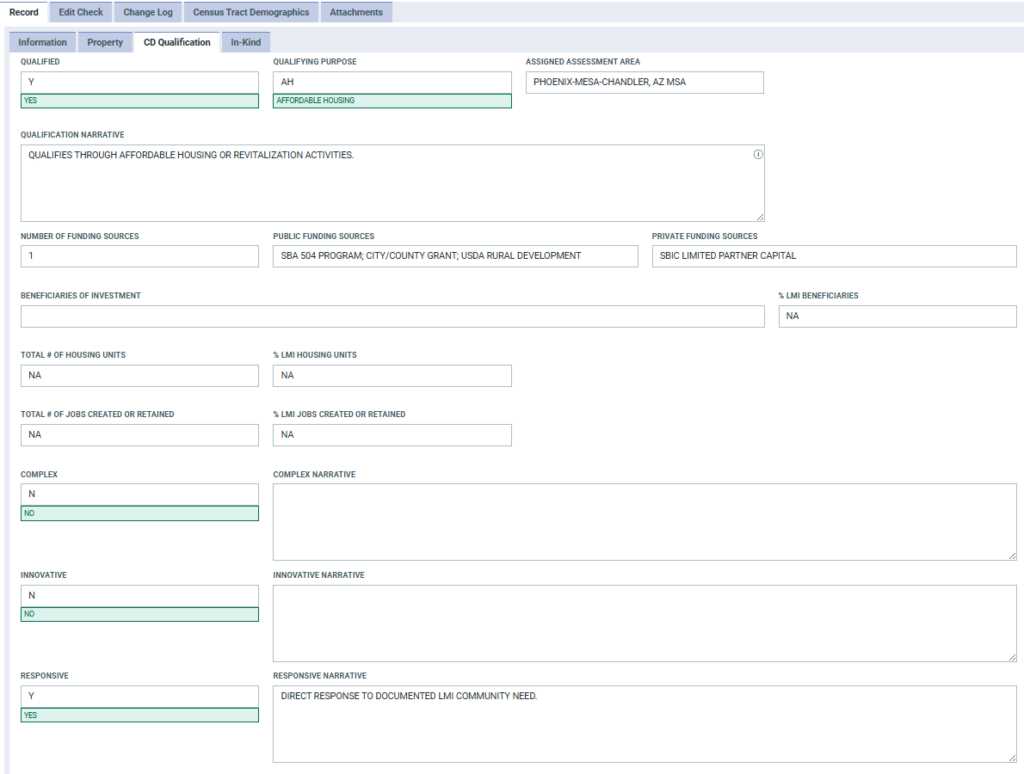
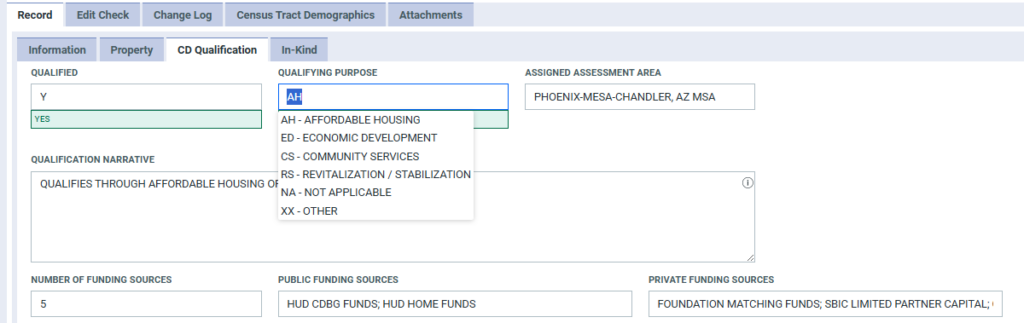
The law may create more investment capacity, but it can also create more records to qualify, monitor, and explain. RiskExec’s Community Development module gives teams one place to manage loans, investments, services, deposits, geographic assignments, qualification narratives, and supporting documentation. It works alongside RiskExec’s broader CRA module for assessment-area and performance-context management.
Teams can use the module to:
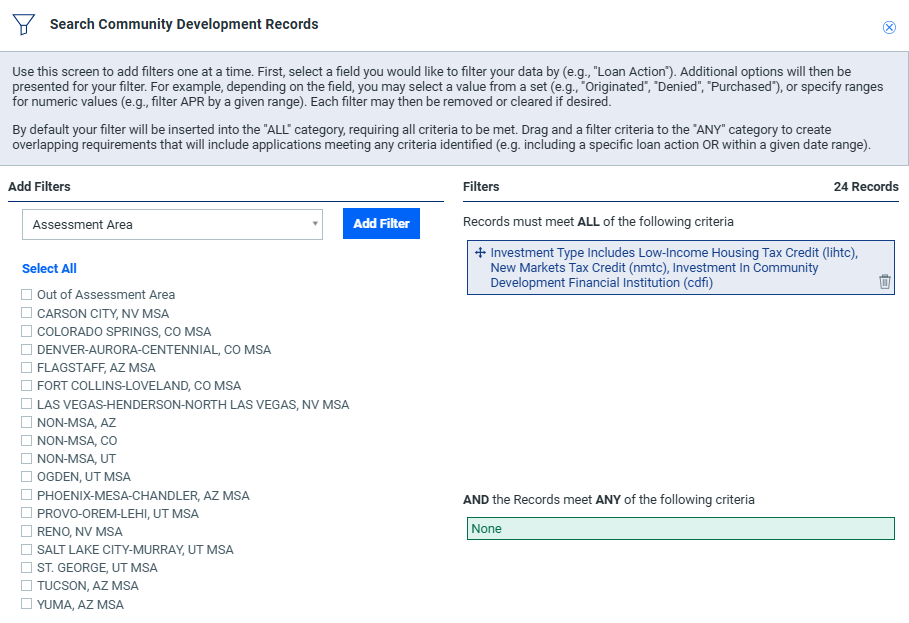
See more on the full RiskExec Community Development Module.
RiskExec does not determine whether an activity legally qualifies for CRA consideration or satisfies public-welfare investment requirements. It provides a working record in which teams can document, classify, review, and report the facts supporting those determinations.
The 21st Century ROAD to Housing Act does not replace the fundamentals of CRA and community development management. Institutions still need to explain why an activity qualifies, identify the geography and population it serves, retain supporting evidence, and be prepared to discuss the activity during an examination.
The first question is also the most important: Is the institution’s charter actually covered by the higher investment ceiling? Capacity modeling, CDBG geography analysis, and documentation planning only matter after that threshold question is answered.
Yes. According to HousingWire, it became law on July 11, 2026, after the President did not sign or veto the enrolled legislation within the constitutional review period while Congress remained in session. A law enacted this way has the same legal force as a signed law.
It raises the aggregate public-welfare investment limit from 15% to 20% of capital and surplus for national banks and state member banks. The change affects statutory capacity only. It does not create a new CRA qualification standard or remove existing notice, approval, and documentation requirements.
No. The amendment changes the authorities governing national banks and state member banks. It does not make a corresponding statutory change for state nonmember banks or credit unions. Each institution should confirm the authority that applies to its charter.
The statutory ceiling changed at enactment, but existing OCC and Federal Reserve notice and approval procedures still apply. A bank planning to rely on the additional capacity should confirm the current requirements with its regulator before committing to a transaction.
New construction of affordable housing is now an eligible CDBG activity, subject to a cap of 20% of a recipient’s allocation. The change applies to amounts appropriated after enactment, not funds that were already appropriated. Although most banks do not receive CDBG allocations directly, the funds often support developers, housing agencies, CDFIs, and nonprofits that banks finance or serve. Changes in eligibility or allocation can therefore affect where community development opportunities emerge.
Confirm whether the higher public-welfare investment ceiling applies to the institution’s charter. Then quantify the potential capacity against the real pipeline, assign responsibility for agency monitoring, map CDBG-related opportunities to eligible geographies, and confirm that documentation processes can support any increase in activity.
Covered banks should not treat the new ceiling as an automatic investment target, but they also should not wait for every implementation detail before beginning their analysis.
The better approach is to quantify the available capacity, evaluate the actual pipeline, confirm applicable regulatory procedures, and determine whether current processes can support additional activity. The opportunity is not simply to make more investments. It is to make well-supported investments that align with the institution’s community development strategy and can be clearly documented during an examination.